
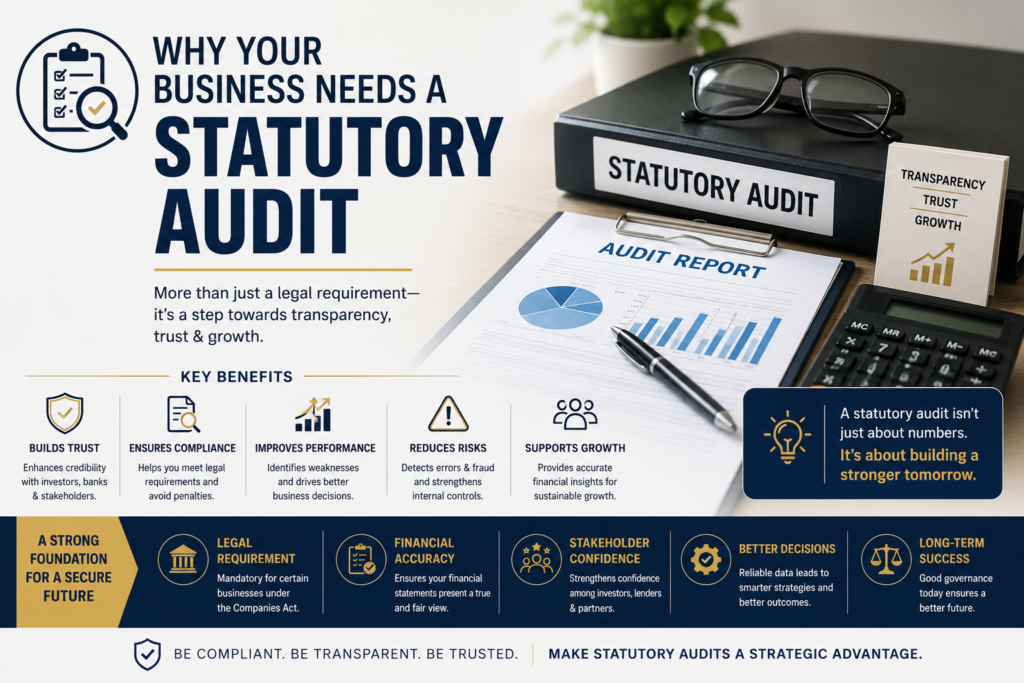
A statutory audit is an independent examination of a company’s financial records to ensure they present a true and fair view of its financial position. For many businesses, it is not optional—it is a legal requirement.
Who Needs a Statutory Audit?
Under the Companies Act, private limited companies meeting certain turnover or paid-up capital thresholds must appoint a statutory auditor. LLPs, trusts, and NGOs may also require audits depending on their registration and funding.
Benefits Beyond Compliance
- Builds credibility with banks for loans and credit facilities
- Reassures investors and stakeholders about financial integrity
- Identifies internal control weaknesses before they become problems
- Improves financial reporting accuracy and transparency
- Supports smoother due diligence during mergers or fundraising
A qualified Chartered Accountant conducts statutory audits with professional skepticism, ensuring your books stand up to scrutiny from regulators, lenders, and partners.